Melasma, freckles and pigment spots: Why do they develop, and how can we get rid of them for good?
We all long for even, radiant skin, but as the years go by – or after a sunny summer – brown spots, both small and large, often appear on our face, neck, décolletage or the backs of our hands.
Dr. Katalin Bodai5 min read
We all long for even, radiant skin, but as the years go by – or after a sunny summer – brown spots, both small and large, often appear on our face, neck, décolletage or the backs of our hands. Whether it is freckles, melasma or other pigment spots, almost always the same process lies behind them: our skin's natural defence system goes into overdrive.
But what exactly happens deep in the skin, why is laser the most effective solution for them, and how can we support the process at home? Let's find out!
The biology behind it: How is pigment produced?
The outermost layer of our skin, the epidermis, is made up mainly of epidermal cells. Scattered among them, in the lower layers of the epidermis, are special pigment-producing cells known as melanocytes. The main job of these cells is to protect our skin from harmful radiation.
When sunlight hits our skin, the melanocytes immediately sound the alarm and start producing more pigment (melanin). Using their long extensions, they pass this pigment on to the surrounding epidermal cells. Inside the epidermal cells, the melanin gathers directly around the nucleus, protecting the cell's genetic material from the damaging effects of UV radiation like a kind of “cap”. This process is tanning itself.
Normally, this tan is temporary. This is because epidermal cells are constantly renewing themselves: over a cycle of roughly 28 days, they are formed, mature, become keratinised and then shed unnoticed. If the skin is not exposed to more sunlight, the melanocytes stop producing pigment. The existing pigment-filled epidermal cells are shed within a month, and the newly formed cells no longer receive a fresh supply – which is how our skin regains its original, lighter colour in winter.
When the system goes wrong: Freckles, melasma and lentigo
Sometimes, however, melanin is not distributed evenly but builds up in well-defined areas. This is what we call hyperpigmentation, which comes in several forms:
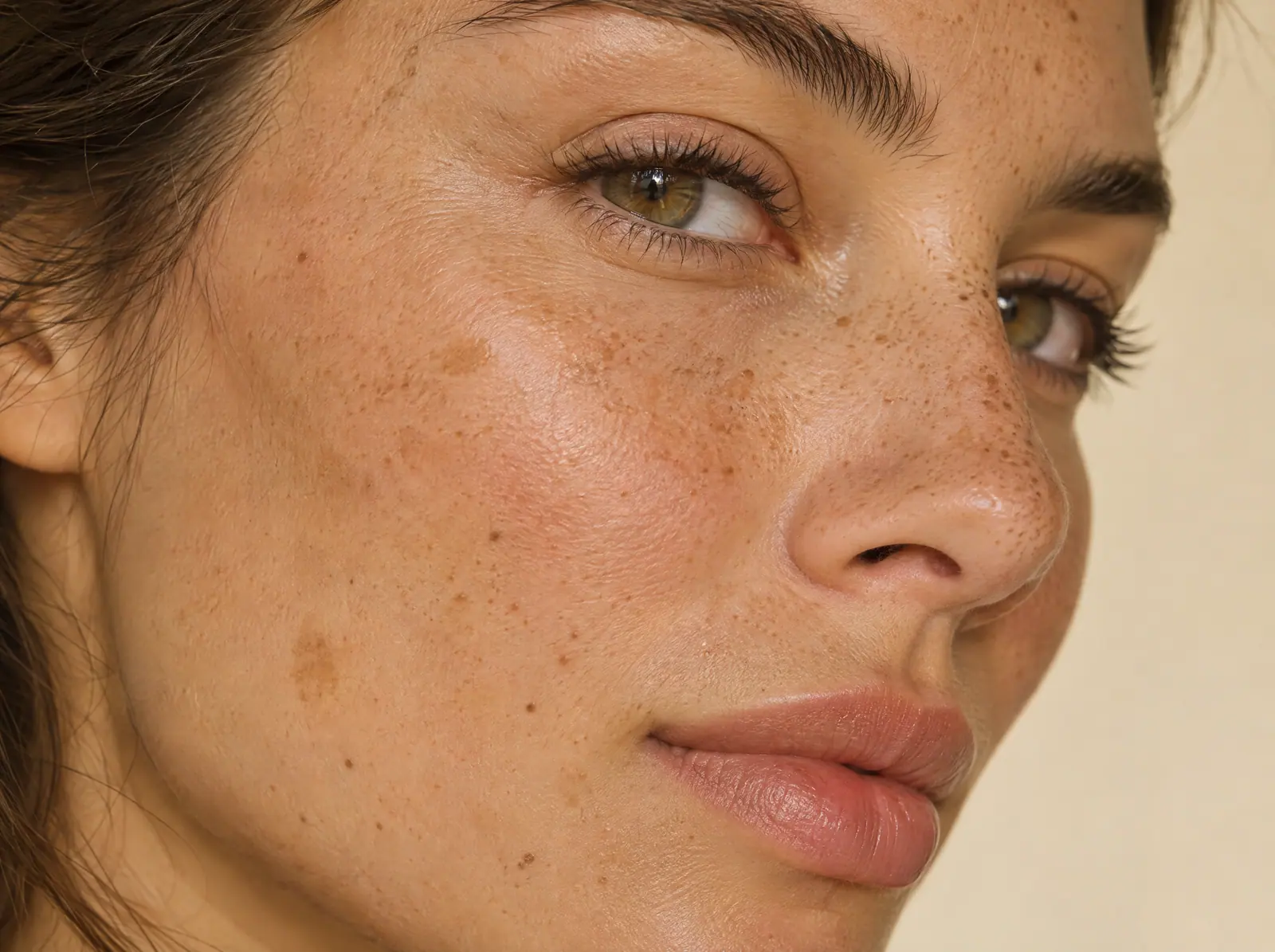
- Melasma: Symmetrical, sharply defined brown patches with a smooth surface, typically appearing on the face (forehead, around the mouth and eyes, along the jaw). Besides genetics, hormonal changes (such as pregnancy or taking the contraceptive pill), internal organ diseases or photosensitising cosmetics also play a part in their development, but the direct trigger is always UV radiation.
- Freckles (ephelides): Round, light-brown spots a few millimetres across, appearing mainly at a younger age in people with fair skin and hair; they darken in summer and fade in winter.
- Lentigo (lentigo simplex): Small, lentil-like, permanent brown spots which, unlike freckles, do not fade even in winter, and often also appear on sun-exposed areas such as the backs of the hands and the shoulders.
Why is laser the most important weapon against pigment spots?
Although various cosmetic treatments are extremely useful for refreshing the surface of the skin, for deeper, more stubborn pigment spots laser treatment is the most effective solution. But why does laser offer something that creams never can?
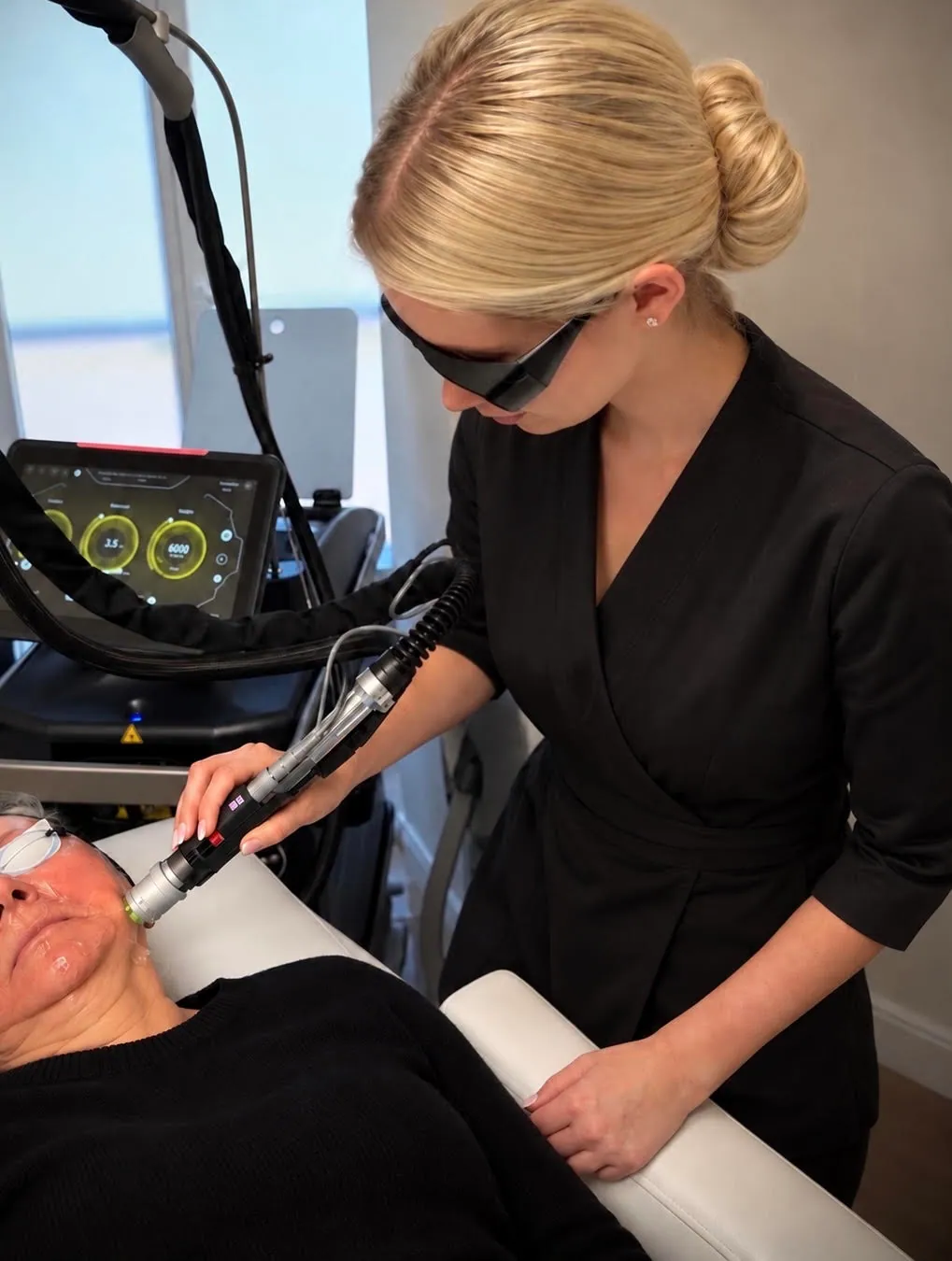
- Targeted and selective action (selective photothermolysis): The laser light is selectively absorbed by melanin. The wavelength of the beam is calibrated so that its energy is used only in the brown pigment, while the surrounding healthy, lighter skin cells are left completely untouched.
- Deep-acting breakdown: Most cosmetic products can only reach the uppermost layer of the epidermis. Laser light, by contrast, can penetrate deeper and shatter the pigment clusters lodged in the deeper layers into microscopic particles. The broken-down particles and melanin residues are then naturally cleared away and removed from the tissues by the body's own white blood cells (the immune system's clean-up cells).
- Fast and visible results: While with a home lightening cream you have to wait months for a modest improvement, laser treatment can bring dramatic and lasting change after just 1-3 sessions. Deeper or more extensive pigment spots may need more treatments to clear completely, and this can be expected to take longer.
- Collagen stimulation: The controlled heat that reaches the skin during treatment kick-starts the body's self-healing processes, resulting in increased collagen and elastin production. So as well as the pigment spots disappearing, the skin's texture also improves, pores tighten and the facial skin becomes firmer.
Skincare at home: How can you support the process?
A thoughtful at-home skincare routine is essential to maintain the results achieved and to support the lightening. In the fight against pigment spots, it is worth looking for the following clinically proven active ingredients in your products:
- Vitamin C: Blocks tyrosinase, the enzyme needed for melanin production, thereby lightening existing spots and boosting the skin's radiance.
- Retinol (vitamin A): Speeds up the renewal of epidermal cells, helping the pigment-filled upper cells to shed more quickly.
- Azelaic acid: Specifically inhibits the activity of overactive melanocytes. It is also an excellent choice for marks left behind after inflammation (such as pimples).
- Niacinamide: Prevents melanocytes from passing the pigment they produce on to the epidermal cells; in other words, it interrupts the pigment's transport route.
- Alpha arbutin: Reduces melanin production extremely effectively and gently, helping to even out skin tone.
The most important step: Prevention
However effective laser technology and modern cosmetics may be, melanocytes “remember”. If the treated skin is exposed to strong sunlight again without adequate protection, the spots can return in no time. That is why the most important cornerstone in the fight against pigment spots is the daily use of a high-factor (SPF 50+) sunscreen – every day of the year!