The spot that could save your life – Everything you need to know about moles and the ABCD rule
Have you ever thought of your skin as a diary? Every summer memory, every afternoon spent at the beach leaves its mark on it – sometimes in the form of tiny brown spots.
Dr. Katalin Bodai3 min read
Have you ever thought of your skin as a diary? Every summer memory, every afternoon spent at the beach leaves its mark on it – sometimes in the form of tiny brown spots. Moles are a completely natural part of our bodies; in fact, they often make us truly unique. There is, however, a point at which a beauty spot can turn into a serious source of danger.
Skin cancer, especially melanoma, is one of the most aggressive types of cancer, but I have fantastic news: if it is caught in time, it is almost 100% curable! All it takes is two things: a little attention at home and an annual dermatological screening.
Why would a mole change now, of all times?
Our skin is a living organ that is constantly changing. Because of UV radiation, hormones and genetics, new moles can appear over time, while existing ones can change. Since malignant lesions look just like a harmless little spot at first, it is easy to shrug them off.
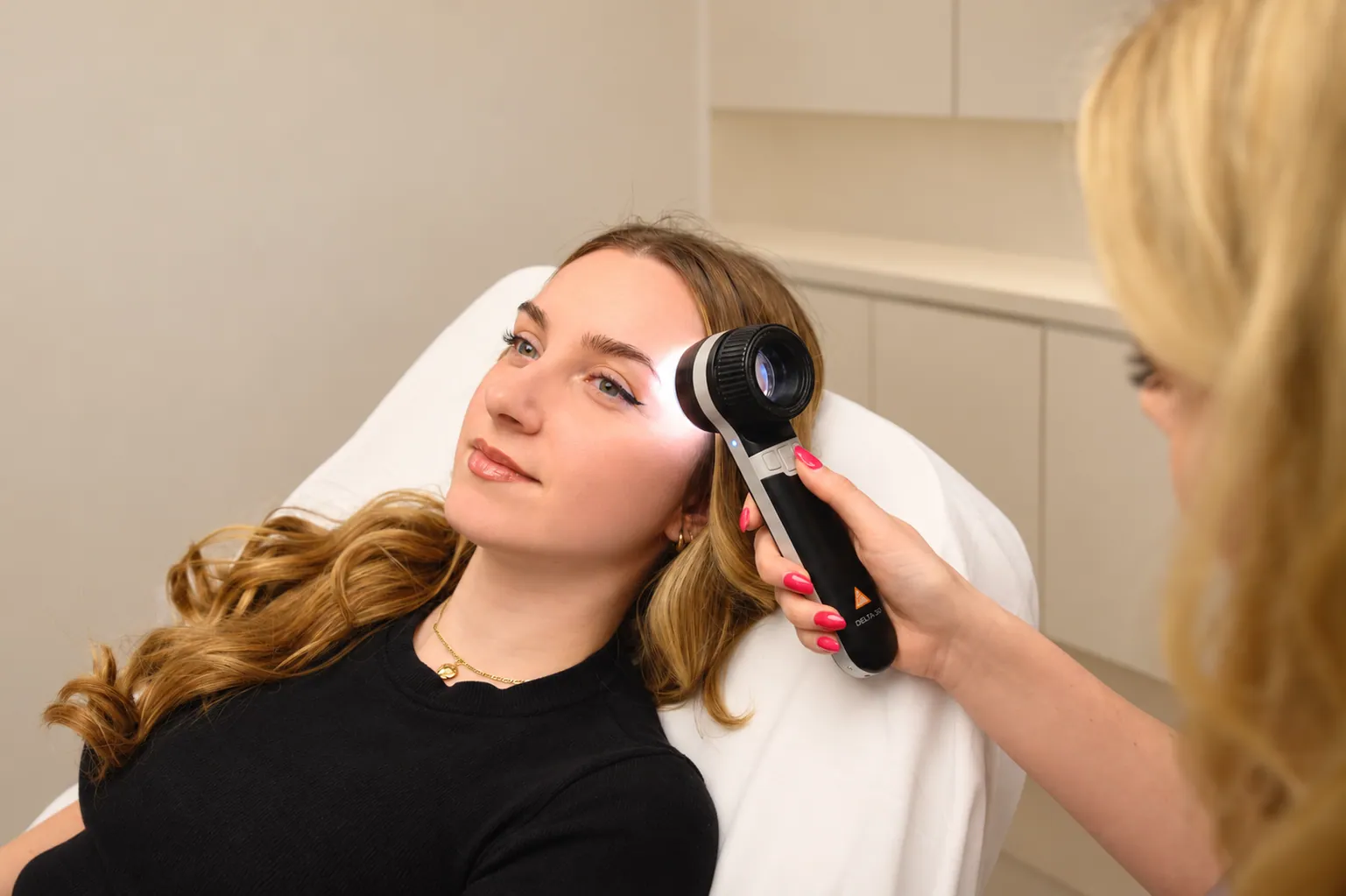
Dermatologists, however, use a special magnifier, the dermatoscope, to see into the deeper layers of the skin, and they can spot tiny structural irregularities that we would never even notice with the naked eye. But what can you do yourself, day to day?
Learn your skin's alphabet: The ABCD rule
You don't need a medical degree to check your skin. It is quite enough to set aside 5 minutes once a month after your shower and run through the international ABCD rule on your moles:
- A for Asymmetry: The good guys are usually a regular round or oval shape. If you divide a mole in two with an imaginary line and the two halves look completely different, that is already suspicious.
- B for Border: The edge of a healthy mole is sharp and clearly distinct from the surrounding skin. If its edges are jagged or blurred, or look as if they are “flowing” into your skin, head to the doctor!
- C for Colour: Safe moles are mostly a uniform brown. If black, grey, blue, red or white turns up within a single spot, that is a serious warning sign.
- D for Diameter: Size really does matter. Moles larger than 6 millimetres (roughly the size of a pencil eraser) need to be watched more closely for changes, although unfortunately melanoma can also be smaller than this.
+1: “E” for Evolution (change): This is the most important one! If a mole suddenly starts to grow, changes colour, becomes raised above the skin, or produces accompanying symptoms such as itching, bleeding or possibly ulceration, don't wait for next year's screening!
Who needs to be extra careful?
Although cancer can develop in anyone, if you recognise yourself in the list below, screening should be a compulsory annual fixture for you:
- You have fair skin, blonde or red hair and blue/green eyes.
- Your body is covered in lots of moles (more than 50).
- There has been a case of melanoma in your family.
- You were badly sunburnt a few times as a child.
- You use sunbeds regularly or work outdoors a lot.
Your skin doesn't forget; it remembers every time you have been out in the sun. Protect it with a high-factor (SPF 30 or 50) sunscreen, avoid the blazing midday sun and, most importantly, pay attention to the signals your body sends you.
If a mole suddenly starts to grow, changes colour, becomes raised above the skin, or produces accompanying symptoms such as itching, bleeding or possibly ulceration, don't wait for next year's screening!