Age warts: What is this strange skin growth, and do you even need to get rid of it?
As the years go by, almost all of us notice new growths on our skin that weren't there before.
Dr. Katalin Bodai5 min read
As the years go by, almost all of us notice new growths on our skin that weren't there before. One of the most common, and one that often causes alarm or cosmetic annoyance, is the so-called age wart (medically known as seborrhoeic keratosis, or senile wart).
Although its name is not very flattering and its appearance can be alarming at first, it is important to make the key fact clear: an age wart is a completely benign skin growth that does not turn into cancer. Even so, many people would like to get rid of it.
In today's post, we look at why it develops, when it is worth taking action, and what traditional and modern medical tools are available to remove it.
What is an age wart, and why does it appear?
An age wart is a benign overgrowth of epidermal cells. It most often starts to appear after the age of forty, on the trunk, back, chest, limbs or even the face. At first it is just a flat, yellowish or brown spot, which over time thickens and becomes raised above the skin, while its surface becomes dry, rough, waxy or “stuck-on” in appearance.
The most important differences compared with viral warts:
- It isn't contagious: While common warts are caused by a virus (HPV), there is no infection behind an age wart, so it cannot be passed on to anyone else, nor does it spread to other parts of our own body through washing.
- The sun isn't to blame either: Its development is mainly down to genetic predisposition and the natural chronological ageing of the skin, not UV radiation.
Does it need to be removed at all?
From a medical point of view, it does not have to be removed, as it is a harmless lesion. However, there are two main reasons why patients still turn to a dermatologist:
- Cosmetic concerns: If it appears on the face, neck or another clearly visible area, it can undermine self-confidence.
- Physical irritation: If it is in a place where clothing (e.g. a bra strap or belt) or a necklace constantly rubs against it, it can easily become inflamed, itchy or painful, or even bleed.
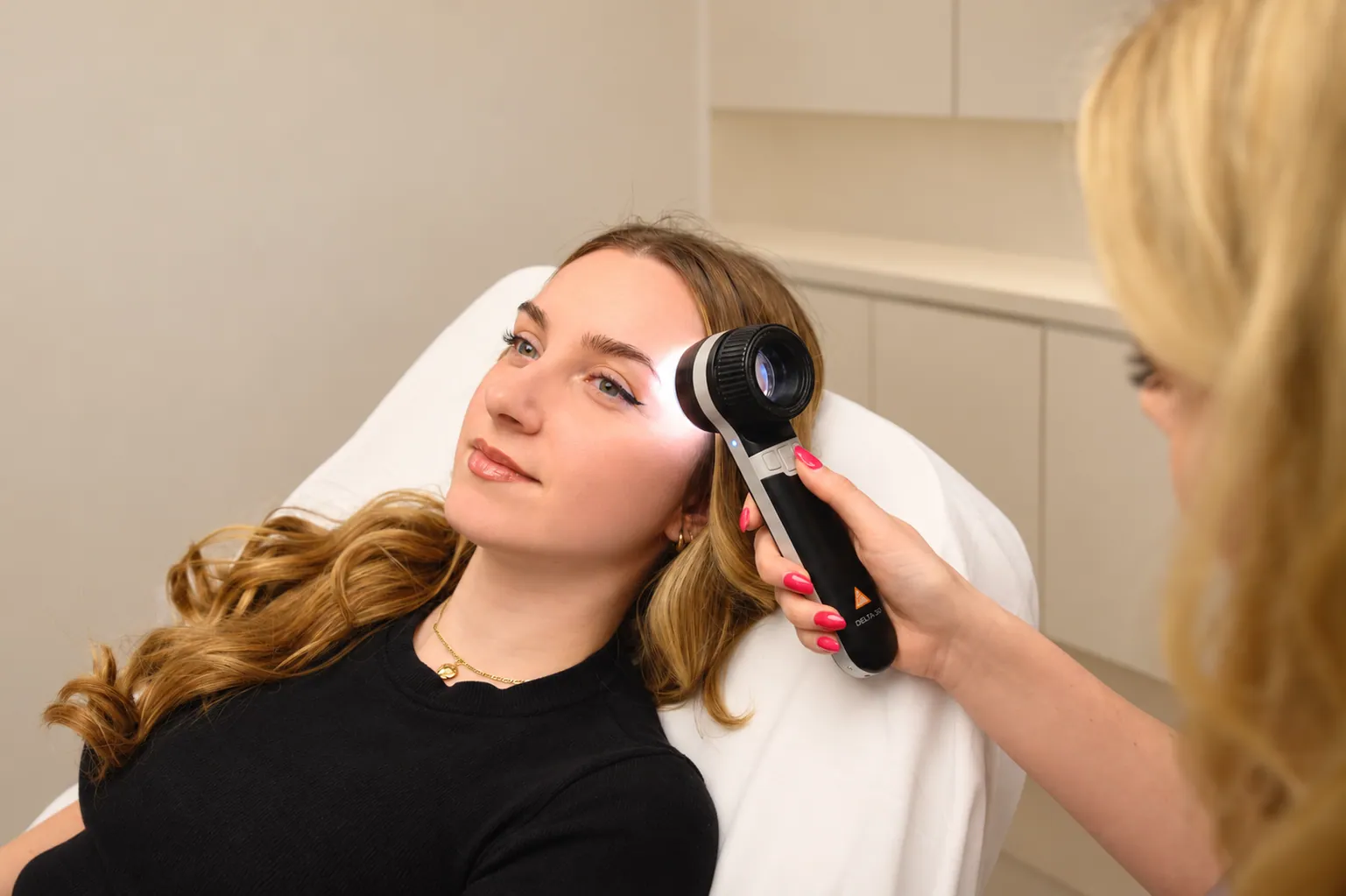
Because it can also be dark brown or blackish, to the untrained eye it can easily be mistaken for dangerous melanoma (a malignant pigmented skin tumour). So before you start any kind of treatment, a dermatological examination (dermatoscopy) is a must, during which the specialist can clearly identify the growth!
How can it be removed? The 3 most popular dermatological methods
If you and your specialist decide that it has to go, modern dermatology offers several proven technologies. Let's look at the most common traditional and modern procedures!
1. Traditional dermatological curettage with a Volkmann spoon
The Volkmann spoon is a classic, sharp-edged, small spoon-shaped surgical hand instrument.
- How does it work? Because an age wart sits only in the outermost layer of the skin, the epidermis, and does not reach deep into the dermis, after a quick local anaesthetic the doctor simply “shaves off” or scoops the growth off the surface of the skin with this special spoon, using a gentle movement.
- Advantage: It is very quick and precise, and because it does not burn the tissue, the removed material is perfectly suitable for histological examination if needed.
- Healing time: A superficial, graze-like wound remains at the treatment site, which heals within 1-2 weeks without a trace or with only a minimal mark.
2. Freezing (cryotherapy)
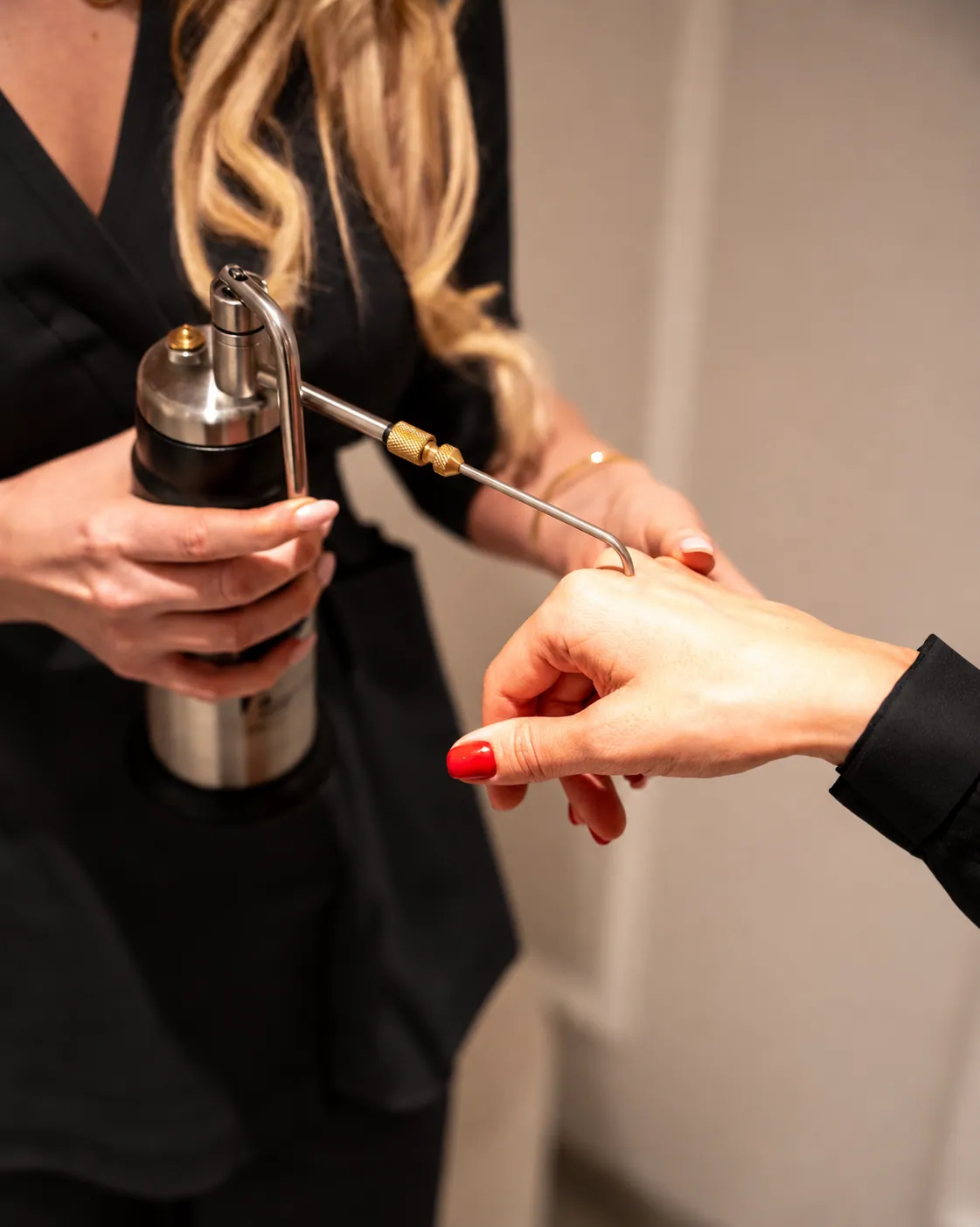
Freezing with liquid nitrogen is one of the most widely used outpatient dermatological methods.
- How does it work? The doctor sprays extremely cold (minus 196 °C) liquid nitrogen directly onto the wart or applies it with an applicator stick. The freezing causes the cells of the growth to die.
- Advantage: It usually does not require a local anaesthetic injection, it is quick to carry out, and several warts can even be treated at once.
- Healing time: After treatment, a small blister or crust forms on the area, which dries out within a few days and then peels off together with the wart. A possible drawback is that the skin in the treated area may remain permanently lighter (hypopigmentation).
3. CO2 (carbon dioxide) laser removal
The carbon dioxide laser represents the modern, premium solution in aesthetic dermatology.
- How does it work? After local anaesthesia, the high-energy laser beam targets the water in the cells of the wart and vaporises the excess tissue layer by layer with microscopic precision.
- Advantage: Thermal damage to the surrounding tissue is minimal, the laser immediately seals the small blood vessels (so there is no bleeding), and once healed it gives the best cosmetic result. It is particularly recommended for growths on the face or neck.
- Healing time: A tiny brown crust remains in its place, which falls off on its own within 5–10 days.
What should you do after treatment?
Whichever procedure you choose, the most important aftercare rule is strict sun protection. Freshly healed skin is thin and sensitive, so if it is exposed to sunlight it can easily darken (hyperpigmentation can develop). That is why it is worth scheduling cosmetic procedures of this kind for the darker autumn or winter months, and using a high-factor (SPF 50+) sunscreen is a must even after healing.
In summary: Age warts are a natural part of life. If they bother you cosmetically or keep catching on your clothes, don't try to scrape them off with home remedies or treat them with caustic wart paints! Book a dermatological consultation, where they can help restore your skin's smoothness with a safe, quick and almost painless method.