Syringoma: What are those tiny bumps under the eyes, and how can you get rid of them?
Have you noticed tiny, skin-coloured or slightly yellowish, firm little bumps under your eyes or on your eyelids?
Dr. Katalin Bodai4 min read
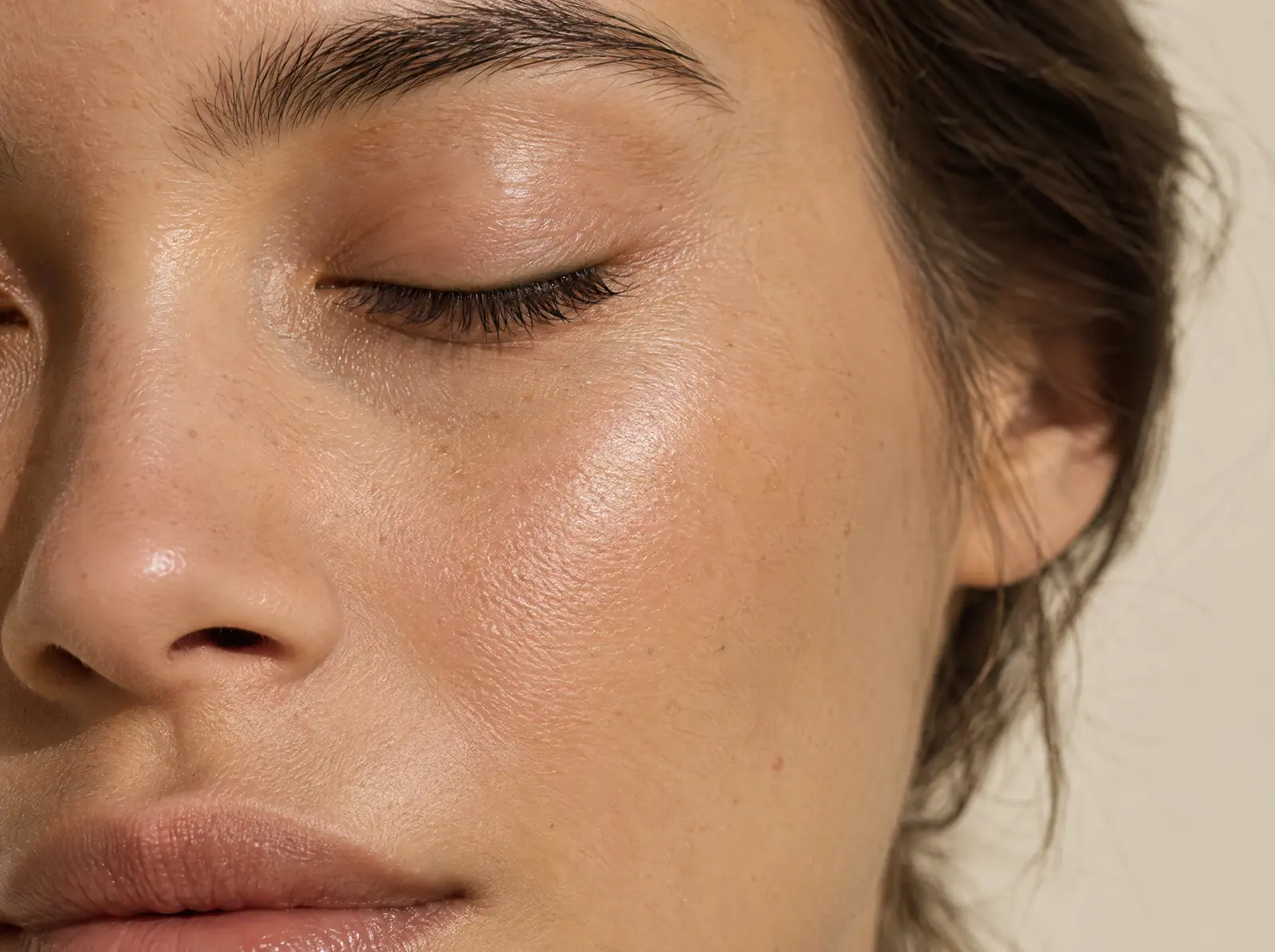
Have you noticed tiny, skin-coloured or slightly yellowish, firm little bumps under your eyes or on your eyelids? At first, many people think they are dealing with stubborn pimples, blackheads or milia (milk spots) and try to squeeze them out – to no effect whatsoever. If that sounds familiar, there is a good chance you are dealing with what is known as syringoma.
Although the name may sound frightening at first, there is no reason to panic. It is a completely harmless condition, but it can be extremely bothersome cosmetically. The good news is that modern aesthetic medicine now offers excellent solutions for removing these seemingly indelible bumps!
What is syringoma, and why does it develop?
Syringoma is nothing more than a benign overgrowth of the sweat glands (more precisely, the eccrine glands). These tiny 1–3 millimetre bumps most often appear in clusters around the eyes, but they can also occur on the face, neck or chest.
Why you?
The exact cause is not always known, but genetic predisposition plays a very important role: if someone else in your family has it, you are more likely to develop it too. It is more common in women and typically starts to appear after puberty or in young adulthood. Because syringomas originate in the deeper layers of the skin, it is unfortunately impossible to get rid of them at home with scrubs, squeezing or creams.
The two most effective weapons: Plasmage vs. CO2 laser
Because syringomas are lodged in the dermis (the deeper layer of the skin), successful treatment requires a procedure that destroys the glandular overgrowth precisely, without damaging the surrounding healthy tissue. In dermatology practices, two technologies are currently considered the most popular and most effective:
1. CO2 (carbon dioxide) laser removal
The fractional or ablative CO2 laser is one of the gold standards of aesthetic medicine.
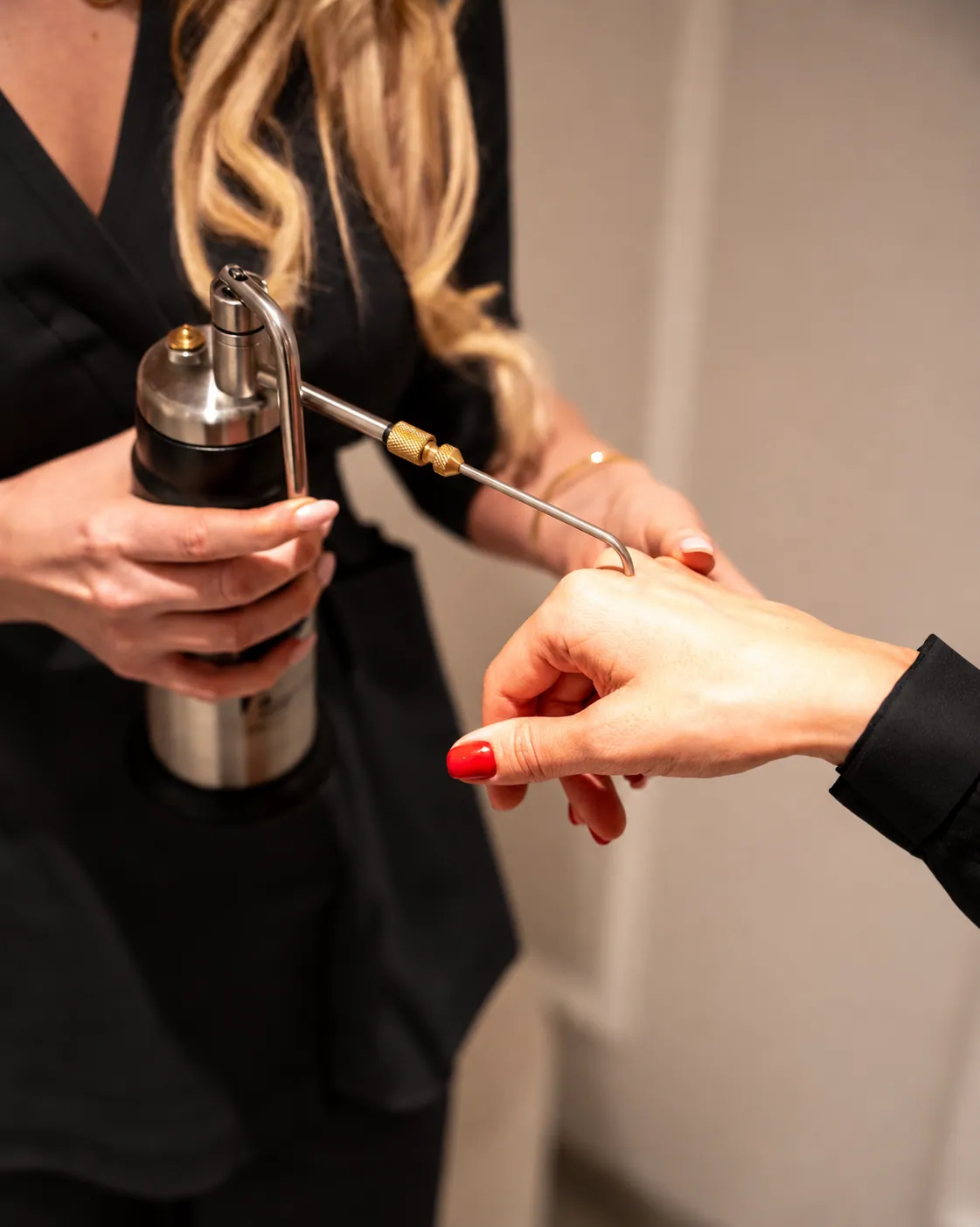
- How does it work? The laser beam targets the water in the syringoma tissue and vaporises (ablates) the excess glandular tissue layer by layer with practically microscopic precision.
- Why is it good? It is extremely precise, the risk of bleeding is minimal, and the specialist can control the depth of treatment to the millimetre.
- Healing time: After treatment, tiny crusts (scabs) form, which usually fall off on their own within 5–10 days.
2. Plasmage (plasma energy) treatment
Plasmage is a relatively new microsurgical device that uses the fourth state of matter (plasma).
- How does it work? The tip of the device does not touch the skin directly; instead, by ionising the gases in the air, it creates a tiny electric arc (plasma discharge). This flash-like energy instantly sublimates the syringoma (turns it from a solid straight into a gas), while stimulating the surrounding skin to tighten immediately.
- Why is it good? It was developed specifically for delicate, hard-to-reach areas – such as the eyelids or the base of the eyelashes. It is extremely safe and causes no deep thermal damage, so the chance of scarring is minimal.
- Healing time: After Plasmage, tiny dot-like brown crusts remain, which likewise come away without a trace within 7–8 days.
Which treatment should you choose?
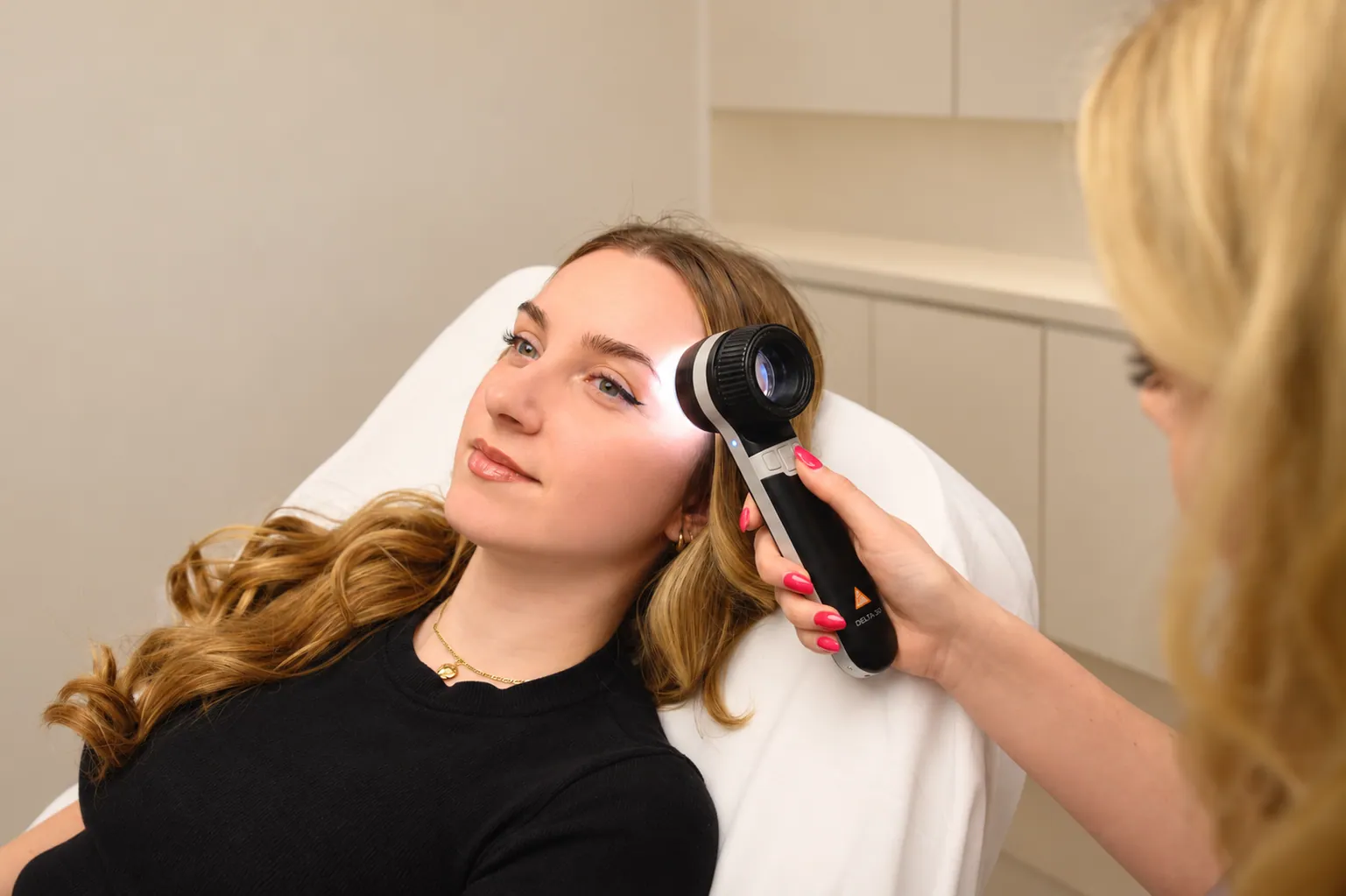
Both procedures are performed under local anaesthesia (an anaesthetic cream or a small injection), so the treatment is completely painless. Whether the CO2 laser or Plasmage is the better choice for you depends on the number, size and location of the syringomas and the individual characteristics of your skin. During a personal dermatological consultation, the specialist will assess the situation precisely and recommend a personalised treatment plan.
What should you watch out for after treatment?
Whichever cutting-edge technology you choose, there are a few ground rules during the healing period:
- Don't pick at the scabs! Let the little crusts fall off on their own, otherwise there is a risk of scarring or secondary infection.
- Strict sun protection: The fresh new skin is extremely sensitive to sunlight. Using a sunscreen of at least SPF 50 and avoiding direct sun exposure are a must for weeks, so that no pigment spot forms in its place.
- Hydration: Using the wound-healing creams recommended by your specialist speeds up recovery.
Final word: Can syringoma come back?
It is important to know that we cannot erase the predisposition to syringoma from our genes. The existing, successfully treated bumps disappear, but over the years – depending on individual predisposition – new ones may develop in the same area. Even so, Plasmage and the CO2 laser are fantastic tools for restoring the smoothness of the eye area, and your self-confidence, for a long time to come.
If these tiny bumps bother you too, don't experiment with squeezing them at home – book an appointment with an expert dermatologist and get rid of them safely!